
Rockledge Previous Residents by Era
No single roll covers the full life of a Rockledge address. Current parcel data supplies the land identity needed to work backward. Recorded deeds then establish title transfers, while directories and census schedules add the household layer. Permits and maps can date changes to the site. The strongest answer comes from sources that overlap rather than from one name in one index.
| Source | Years It Covers | Where Held | What It Shows |
|---|---|---|---|
| Official Records online | January 1, 1981 to present | Brevard Clerk Acclaim | Parties, instrument, date, legal description, and permitted image |
| Earlier deed books | Before 1981 | Clerk research, office books, archives, or microfilm | Earlier links in the title chain |
| Hill-Donnelly reverse directories | 1969-85, 1987-89, 1991-99, 2001-02, 2004-06 | Central Brevard Library | Address or phone subscriber and nearby numbers |
| Polk Cocoa-area directories | 1958-93 and 1995-99, with a 1999 shelf ambiguity | Central Brevard Library | Named resident, address, and edition-dependent details |
| Federal and Florida censuses | Federal through 1950; surviving state schedules through 1945 | NARA, libraries, State Archives | Households, relations, ages, and occupations |
| Permits and planning files | Dates vary | Rockledge Building, Planning, and city requests | Work, applicant, owner, contractor, and site |
Start with the current parcel card even when the goal is much older. Its parcel ID, subdivision, lot and block, or metes-and-bounds description keeps the search tied to the land. For the late twentieth century, pair deeds with reverse directories. For an earlier Rockledge household, use census, probate, newspapers, tax sources, church or cemetery records, and the older deed path.
Start Rockledge Address History Correctly
The Brevard County Property Appraiser separates the situs address, the parcel's physical site, from the owner's tax mailing address. Neither field by itself proves who occupied the house. A matching mail and situs address plus a homestead exemption strengthens an owner-occupancy inference, but it still does not name every person in the home. Save the account number, legal description, owner, sales references, municipality or taxing district, and map link.
Use the parcel's legal identity whenever a street label is uncertain. A postal Rockledge line does not prove the parcel was within city limits at every point in its history. Annexation files from Rockledge Planning may explain why the office holding permits changed while the property stayed put.
Condominiums need extra care. Match the unit parcel and unit-level legal description, not just the building's street number. In older riverfront areas, a deed may rely on metes and bounds, a written course-and-distance description, while later subdivisions tend to use lot and block. Save both the text and the map context before following any name. The same person can own several parcels, and the same street can cross subdivisions or government lines.
Walk Brevard Deeds Backward
The Brevard County Clerk of the Circuit Court & Comptroller is the recorder for Rockledge property. A grantee is the party receiving an interest; a grantor is the party transferring it. Begin with the current owner's acquisition, confirm the exact legal description, and then turn the seller into the next search name. Mortgages show financing, not a transfer of ownership, and a quitclaim may transfer an interest without a market sale.
- Copy the current owner, parcel number, legal description, and sale reference from BCPAO.
- Search that owner as grantee in Acclaim, then open the purchase deed or index entry.
- Confirm grantor, grantee, recording date, and the same lot, block, unit, or metes-and-bounds description.
- Search the seller as an earlier grantee. Repeat until the online trail reaches its cutoff.
- Give Clerk Research the last verified party, book and page, and legal description to continue in earlier books.
- Grantor and grantee
- The grantor gives or sells an interest; the grantee receives it.
- Chain of title
- The linked series of instruments showing how ownership passed over time.
- Legal description
- The deed's land identity, often lot, block and subdivision, or a surveyed written boundary.
- Criss-cross directory
- A directory arranged by address or phone rather than by a person's name.
The Brevard Clerk's Official Records page explains the recorder and the web index. The captured page shows where previous-resident research enters the recorded deed system.
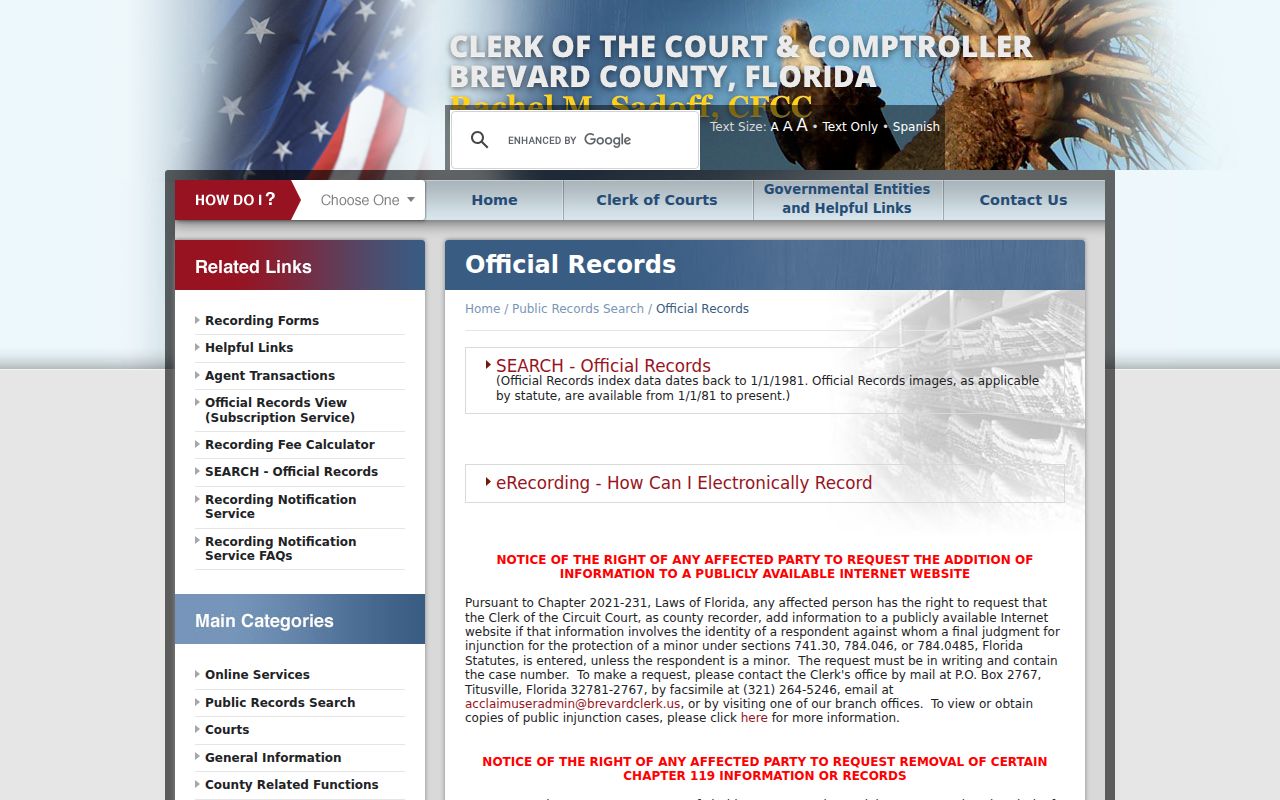
Use the office's own index and copies as evidence. A parcel sales list is useful navigation, but it is not a substitute for the complete recorded instrument trail.
Cross Rockledge's 1981 Record Seam
Acclaim's online universe begins January 1, 1981. That date is a technology boundary, not proof that older deeds vanished. Once a chain reaches it, contact the clerk for grantor-grantee books, land-record research, office records, or microfilm. Search all spelling forms, initials, suffixes, hyphens, compound surnames, trusts, and business names. The clerk specifically advises spelling variations and omitting “The” and most symbols in a business-name search.
The Clerk's public-record request instructions document online, telephone, mail, and counter routes. The request-page capture is a reminder that a portal miss should lead to a focused request, not a claim that no record exists.
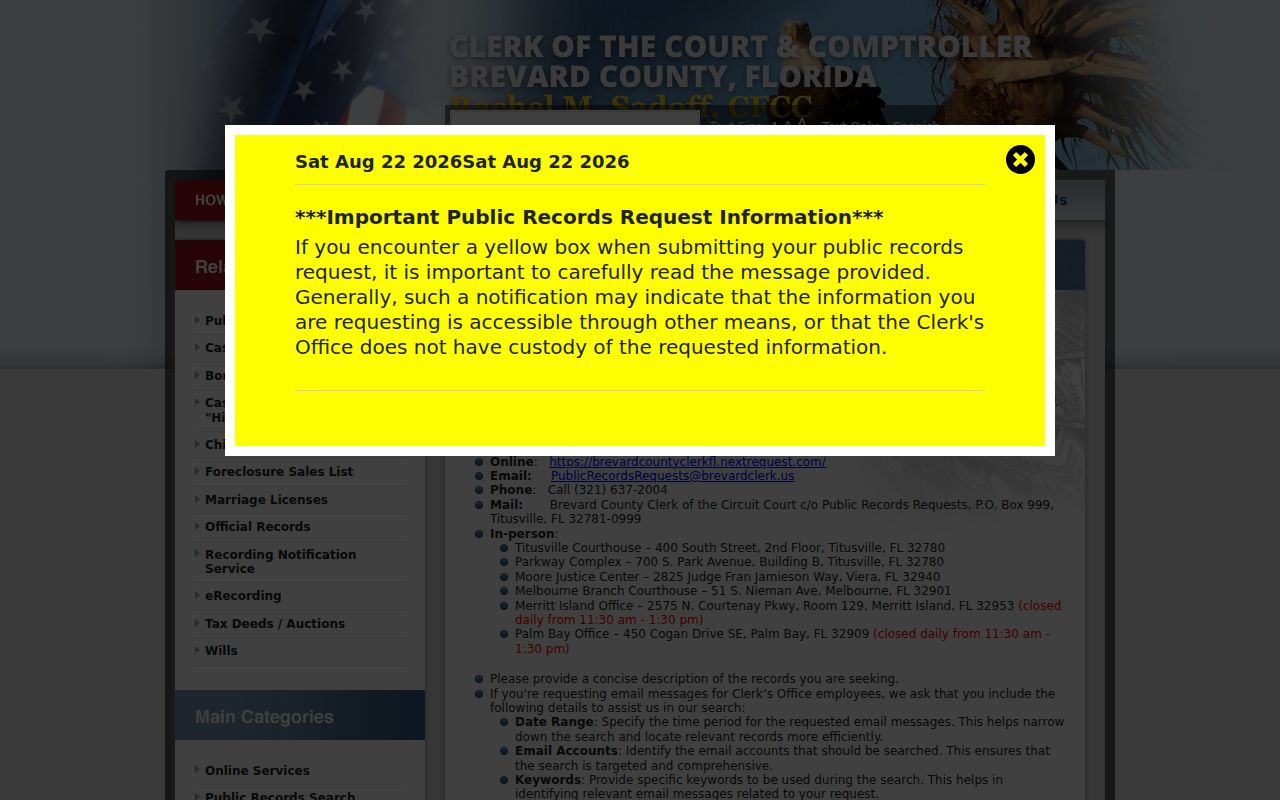
Ask for an existing index entry or deed copy using names, a date range, legal description, and any known book, page, or instrument number. Florida law does not require a stated purpose, though the NextRequest portal may be useful for tracking.
The Brevard Clerk NextRequest portal provides the online request channel shown below.
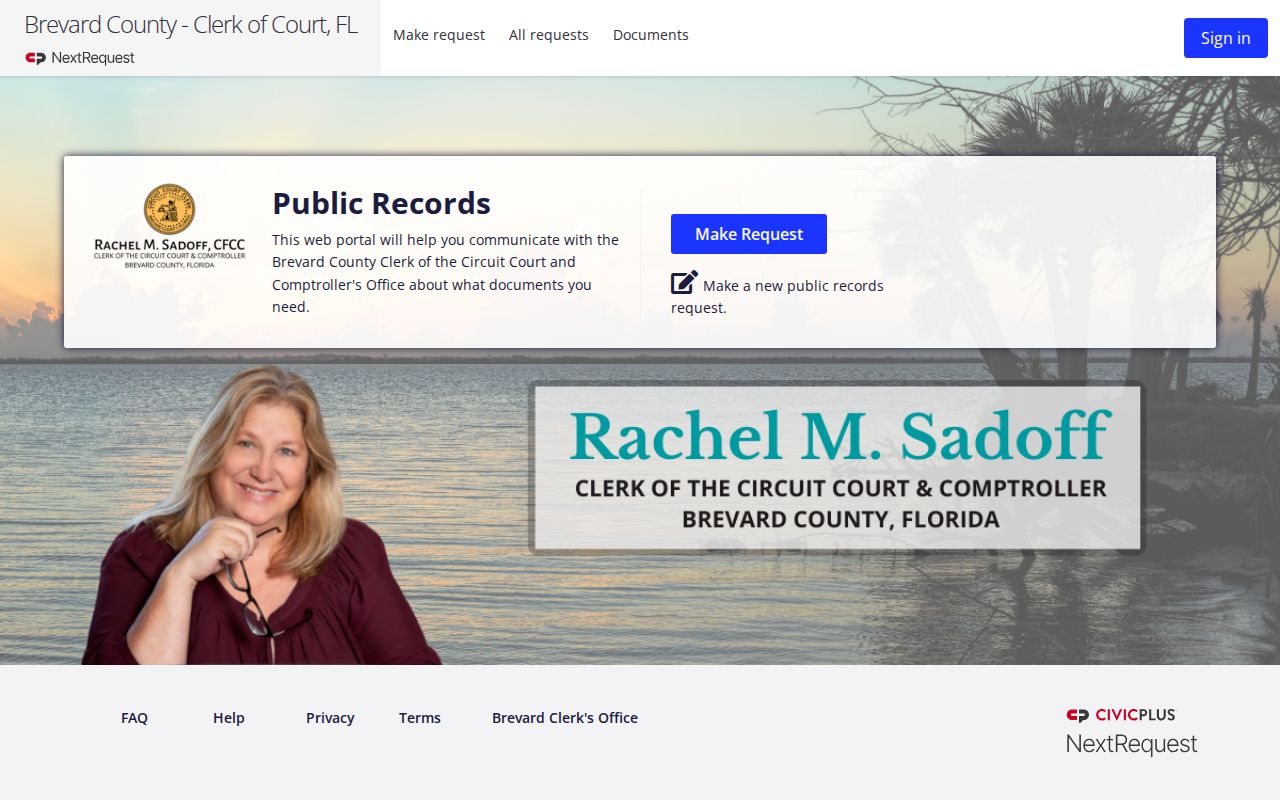
Telephone, mail, and counter access remain valid fallbacks. A requester may also use direct division contacts when the needed book or archived instrument is known.
Pair Rockledge Directories and Census
Directories help identify previous residents who never held title. Central Brevard Library's Hill-Donnelly books are especially useful because they run by address or phone, not by name. Find the street, scan house numbers, write down the listed subscriber, and then compare the closest Polk volume. A subscriber may be an owner, renter, business, or simply the phone account holder.
- Bracket the target year with the available reverse-directory volumes.
- Check the same name in the closest Polk volume for spouse, occupation, and address clues.
- Move one volume at a time to mark first and last appearances, noting gaps in publication.
- Compare with the public 1950 federal census or surviving Florida schedules through 1945.
- Use deeds, probate, obituaries, and newspapers to explain a change instead of guessing.
The full shelf runs and reading method belong on the Rockledge city directory page. For address history, the key point is timing. A census records one enumeration date, and a printed directory may lag its survey. A missing entry may mean a missing book, an unlisted phone, a renter or subscriber change, or a postal shift. It does not prove the household moved.
Date Change at a Rockledge House
Building and planning records add a physical timeline. Rockledge permits can identify the site, work, applicant, owner, contractor, value, and dates. The city is moving permitting software, so older files may sit outside the current portal. Request archived records from Building or Planning when an online search fails. Planning also maintains annexation, variance, subdivision, and site-plan files.
A project valued at $5,000 or more requires a Notice of Commencement recorded with the Brevard Clerk. This creates a useful bridge between a city permit and Official Records, often adding the owner, contractor, lender, and legal description. Parcel year-built is an appraisal field, not an exact move-in date. Aerial imagery and Sanborn maps may add context, but no verified Rockledge Sanborn sheet years were found, so check the catalog before promising a map.
The Recording Notification Service page also explains name and legal-description monitoring in the clerk system.
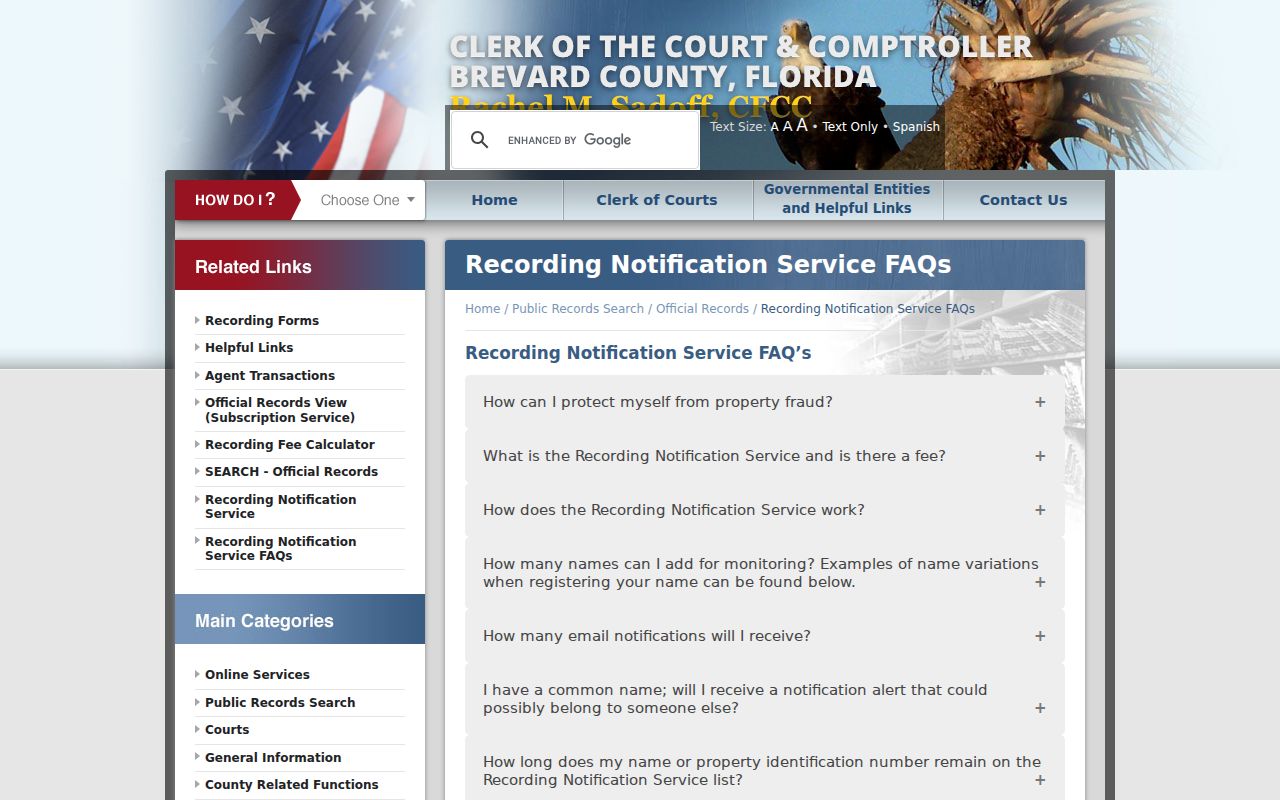
The alert is free and can flag a newly indexed instrument, but it cannot prevent a recording or decide whether an instrument is valid.
Get Rockledge Deed Copies
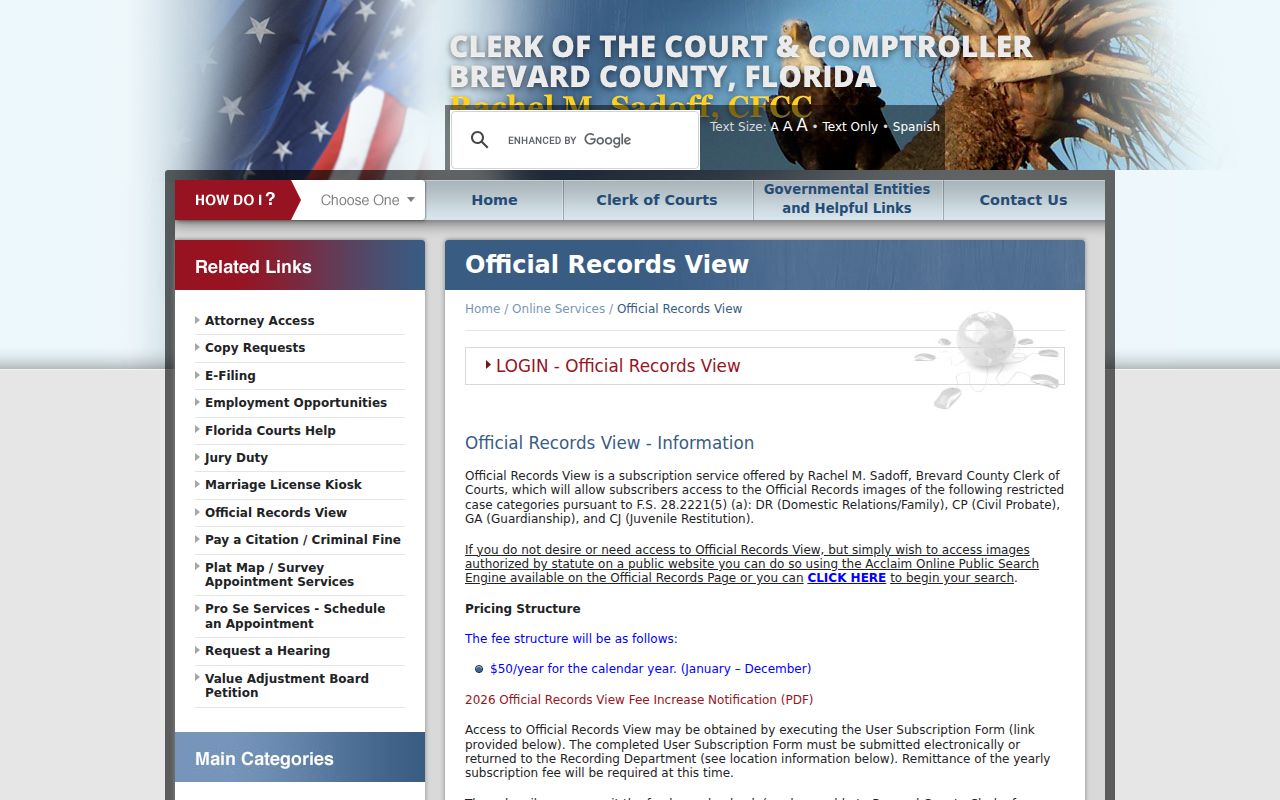
Public index data and images allowed by statute are free online. Some protected image classes are withheld, and the branch-office record is authoritative. The clerk offers a separate Official Records View subscription for restricted categories to qualified users, not as a general shortcut around privacy law.
The Official Records View information shows that distinct access route and its limits.
For an ordinary house-history project, request the public copy or certified copy directly from the custodian. Do not treat restricted access as evidence that a former resident's private information should be available.
The Brevard Clerk office directory lists the divisions that can route deed-book, recording, and archived-copy questions.
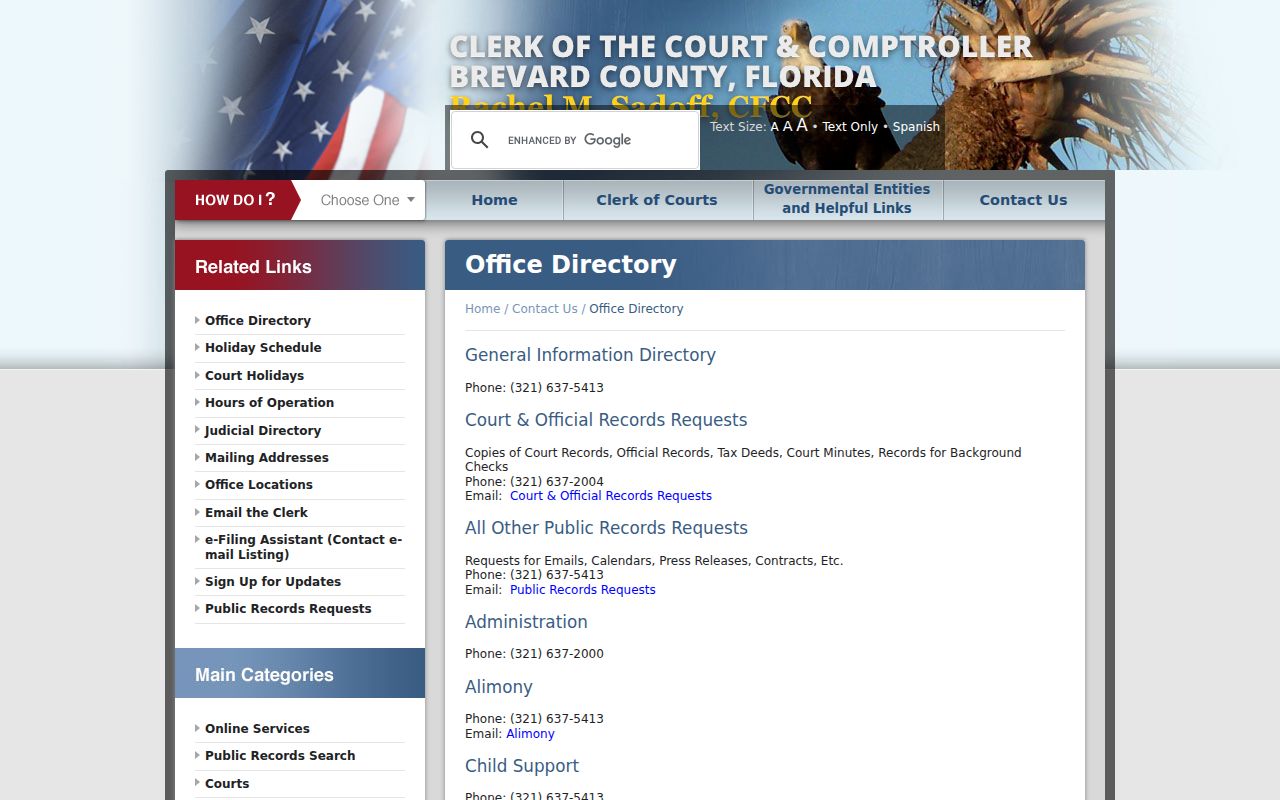
Bring or send the parcel's legal description and the last verified recording reference. Precise identifiers reduce false matches and let staff locate the existing record without being asked to build a new history.
Confirm Rockledge Past Households
Previous residents are not the same as prior owners. Deeds identify title parties. Reverse directories point to a subscriber. Census schedules can name a household and relations. Obituaries, cemetery sources, and probate files may then explain death, heirs, or an estate transfer. Keep each claim at the level the source supports, especially when a trust or corporation appears on the parcel card.
Search a deceased owner in the Brevard probate case index, then request public petitions, orders, wills, or estate deeds by case number. Newspaper and funeral-home notices can supply leads, but verify relationships with probate or vital records. For early riverfront land, legal descriptions and historic maps may matter more than a modern street line. Later subdivisions are usually easier to follow by lot and block, while condominiums demand unit-level precision.
Central Brevard reference staff, the Brevard Historical Commission, and the State Archives can help when the web trail ends. Archives catalogs often describe a box, volume, or series rather than showing a scanned page. Give staff a narrow range, the parcel identity, and known names. Florida Memory offers selected digital records, while federal census and military sources may add a person's age, family setting, or earlier county tie.
Lawful use. Research Rockledge previous residents for house history, genealogy, and personal curiosity. Never use an address trail to track, intimidate, or harass a living person.